

It is easy, perhaps emotionally satisfying, for the Liberal Party to blame the teal independents. They make convenient villains, ones who are affluent, inner-suburban, climate-conscious, professionally polished and effective at winning seats that once seemed permanently Liberal. Their campaigns have benefited from a sophisticated network of donors and organisers, most visibly through Climate 200. The teals are not apolitical neighbours who wandered innocently into Parliament House. Like any other political coalition, they have a recognisable vocabulary – climate action, integrity, gender equality, localism and distance from the major parties. The Liberals must understand that the teals are not the cause of their difficulties, but evidence of them.
A Warning from Liberal Heartland
The seats that the teals won tell the story. Kooyong was not an outer-suburban Labor seat; it was the seat of Robert Menzies and, until 2022, Josh Frydenberg. Wentworth was Malcolm Turnbull’s old seat. Warringah once belonged to Tony Abbott. Curtin, Mackellar, Goldstein and North Sydney were not natural homes for class-war socialism. They were among the most educated, prosperous and globally connected electorates in the country, precisely where a centre-right party such as the Liberal Party should expect to thrive. Their voters tend to believe in markets, enterprise, private property and responsible economic management. Many are lawyers, doctors, executives, consultants, small-business owners, parents and retirees with a strong interest in stability. But they simply stopped believing that the Liberals still spoke to them.
This matters. A voter in Kooyong who cares about climate change is not automatically a Green. A voter in Curtin who wants stronger integrity laws is not definitionally hostile to business. A voter in Mackellar who dislikes aggressive political rhetoric is not necessarily left-wing. Yet many Liberals have characterised these issues as enemy territory, as though climate, integrity and tone naturally belong to progressives. They do not. There is a conservative case for environmental prudence, because one generation should not gamble recklessly with what the next must inherit. There is a conservative case for integrity, because institutions cannot survive when public trust decays. There is a conservative case for civility, because a stable society depends on restraint, proportion and courtesy. The tragedy, then, is that many decided the Liberal Party simply did not care enough.
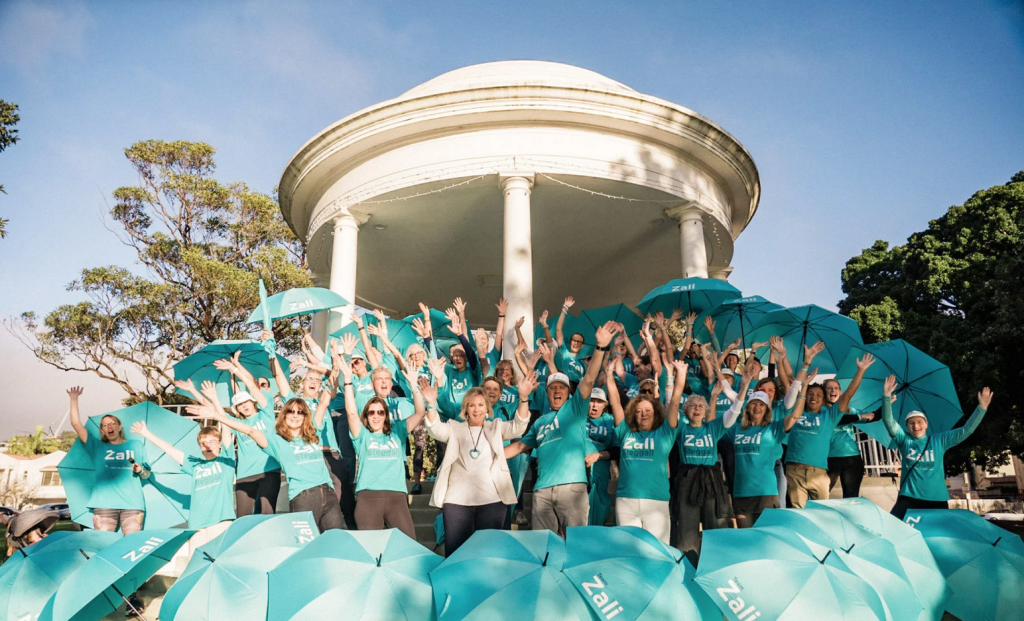
The teals succeeded because they stepped into a space the Liberals had left open. Their candidates spoke the language of accountability, transparency and community in a way that felt reassuring to professional electorates tired of factional noise. Their campaigns were highly organised, but they did not appear corporate and machine-like. They knocked on doors and built local identities that seemed to fit the mood of their suburbs. By contrast, the Liberal brand in those same places often looked defensive on women, uncertain on climate and distracted by arguments that felt remote from daily life. This perception was not always fair to individual Liberal candidates, many of whom were capable and hardworking. But politics is judged by accumulated impressions, and over time those impressions became damaging.
Compete, Don’t Imitate
None of this means the Liberal Party should seek to copy the teals. That would be both unprincipled and ineffective. A centre-right party cannot win by apologising for being centre-right, nor can it abandon outer-suburban families, migrants, tradies, regional communities and small-business owners in pursuit of professional-class approval. The Liberals must remain a party of aspiration and enterprise. It should be unapologetic about lower taxes, reliable energy, stronger defence, border protection, school standards, safer communities and a housing market in which work once again leads to ownership. But above all, their supposed economic competence has to be joined to moral seriousness. For example, energy policy has to sound like a credible plan for cheaper and more reliable power, not simply a complaint about the Labor Party’s targets. Housing policy has to do more than express sympathy for young Australians locked out of ownership – it must show that the Liberal Party still believes hard work and aspiration should lead somewhere. If the Liberals cannot connect their principles to the pressures people actually feel, it should not be surprised when voters look elsewhere.
The teals themselves deserve scrutiny. Their independence can be overstated, and their politics often reflect a narrow, affluent kind of moderation. Their language of community sometimes conceals a strikingly uniform worldview, one far more comfortable in prosperous professional suburbs than in mortgage-belt estates or regional towns. Their climate policies can glide too easily over the hard questions of reliability and cost of living. Their suspicion of party politics can also sound naive. Parties are flawed, often deeply so, but they perform an essential democratic function. They aggregate interests, form governments and make decisions across a whole country, not just within electorates wealthy enough to sustain independent campaigns.

Still, none of these criticisms changes the central point. The teals won because the Liberals left political space unoccupied. They did not invade Liberal heartland so much as reveal how much of it had already become uncertain. The enemy is not the independent MP on the crossbench. The enemy is complacency and the comforting belief that once-safe seats will eventually return out of habit. Voters who care about climate, integrity, local representation and tone have not necessarily abandoned the Liberal Party, but they will not come back simply because it tells them they are wrong.
The teals should be understood as a warning flare from the old Liberal heartland. They show that many Australians still want moderation and responsibility, but no longer automatically associate those values with the Liberal Party. That should hurt.
Read more: The Insight Corner



The Liberals have nobody to blame but themselves for losing Kooyong
How independent are they really when they all get support from Climate 200?
Receiving donations doesn’t automatically mean someone isn’t independent.
Interesting article but there’s a reason the teals only seem to do well in wealthy electorates
I reckon a lot of voters just wanted someone who would actually turn up in the electorate rather than spend all their time in Canberra.
This is all well and good but what about the voters in western Sydney and regional Queensland? Can’t please everyone