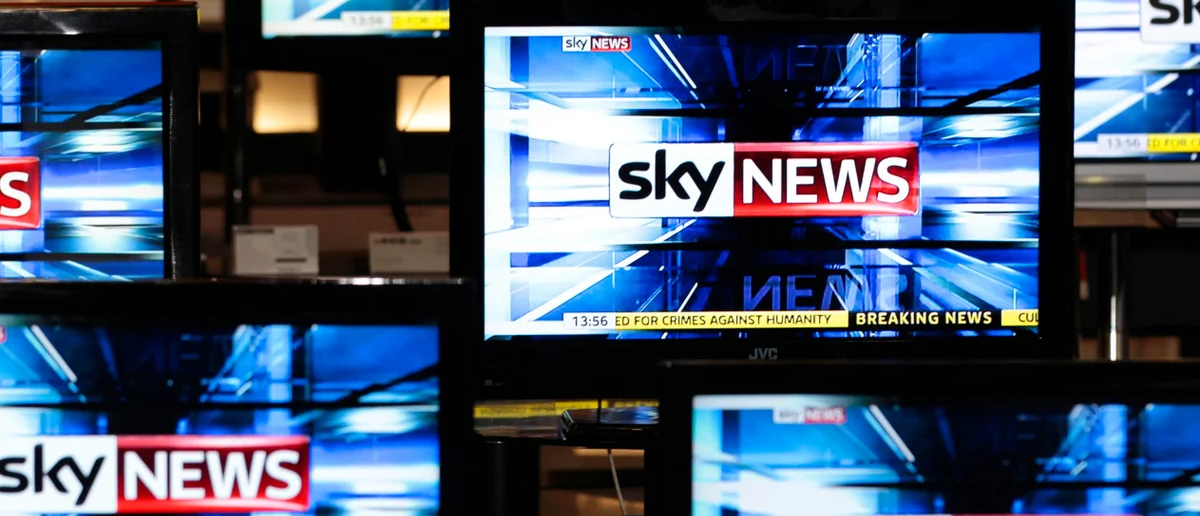
In February, at a gala marking its thirtieth anniversary, Sky News Australia announced it would retire its own name. The announcement came during the official opening of the network’s new Surry Hills headquarters, with Prime Minister Anthony Albanese and New South Wales Premier Chris Minns presiding over the launch while Pauline Hanson and Tony Abbott were among the guests, an eclectic turnout for a network about to shed the very brand its “after dark” critics had spent a decade mocking. By 27 July, Sky News Australia had relaunched as News24, acting ahead of the December expiry of a decade-long licensing deal that Comcast-owned Sky UK, bound by impartiality obligations its Australian namesake never shared, chose not to renew. Retiring a 30-year name is tidy enough as corporate housekeeping. What it cannot retire, merely by changing the masthead, is the structural choice that made the old name notorious – one network running two editorially distinct products.
A tale of two timeslots
Tune into the renamed network at nine in the morning and you get Laura Jayes’s AM Agenda, setting the day’s agenda with breaking news and detailed interviews. By eleven, chief news anchor Kieran Gilbert is hosting NewsDay live from Canberra, conducting the kind of measured, adversarial interview that wire-service journalism runs on. Tune in again at six and the register changes completely, with Peta Credlin’s Credlin, followed at seven by Andrew Bolt’s Bolt Report, followed at nine by Paul Murray Live, direct-to-camera editorialising aimed less at informing an undecided viewer than confirming one who has already committed. Media researchers have a term for the structure, a ‘bifurcated content strategy’, professional and openly partisan once the sun goes down.

‘Sky After Dark’ was never the network’s own coinage. The phrase was popularised by the network’s detractors, then adopted so widely that it now functions almost as a proper noun, despite the organisation itself never officially using it. This is yet another label applied from outside, by people hostile to the thing it names, nonetheless forcing even sympathetic viewers to borrow the critic’s vocabulary just to describe what they’re watching. It is worth watching whether an equivalent nickname attaches itself to the evening schedule under its new name, or whether a clean rebrand can buy a few years of neutral description.
Why split the product at all?
The split is the business model itself. The daytime service needs the trust and advertiser-safety that comes with resembling conventional journalism, since that is what secures mainstream credibility and a seat at the press conference. The evening hours are something else entirely – a digital operation explicitly chasing the kind of global reach Fox News had already proven possible, whose most-watched clips skew heavily toward Trump-and-Biden-era American culture-war content, with the surrounding comments suggesting an audience that is disproportionately American rather than Australian. The network’s own 2021 audience research claimed a third of the national audience was engaging with it monthly across two platforms, a reach built mostly on the daytime desk’s back rather than the opinion hours it is better known for.

The cost of the split
This should concern both critics and an audience sympathetic to the network’s politics. The internal defence, that the six o’clock monologue is opinion and the eleven o’clock interview is news, assumes an audience experiencing the schedule in order, the way it was designed to run. Almost nobody does. Most people encounter this network as a clipped grab on social media, stripped of its dayparting, where “News24 said” attaches as readily to a Bolt editorial as to a Gilbert interview. The daytime desk spends years building credibility that aims to persuades a sceptical reader, credibility that it then spends nightly by the evening desk. Tellingly, the network’s 2026 relaunch was covered by trade press as doubling down on opinion, rolling out additional commentary formats and a new in-house polling arm. The company’s own announcement promised the rebrand would leave its editorial approach untouched, a frank enough admission that the name was never the thing actually in question.
A rebrand changes what the masthead is called, but it does nothing, by itself, to change which of the two products the public increasingly assumes the whole network to be. Sky News Australia has just demonstrated that you can retire a name in an afternoon. Retiring the choice that made the name notorious is evidently a longer project, and not one this masthead has any intention of starting.
Read more: The Insight Corner