Open any newspaper, scroll any parliamentary Hansard, and the same three words seem to appear over and over again – “cost of living.” It has morphed into the default vocabulary for economic distress across the Anglosphere, from Westminster to Canberra to Washington. What merits attention here is not that politicians discuss prices, but that they have converged so completely on this particular formulation, one that erodes the substance of the debate it purports to describe.
From statistical instrument to vernacular reflex
“Cost of living” began as technical apparatus. Cost-of-living indices predate the modern CPI by decades, devised by economists and statisticians to track the price of a fixed basket of goods over time. For most of their existence, they remained instruments of wage arbitration and monetary policy, rather than campaign rhetoric.
Their migration into demotic political speech accelerated sharply after 2021, as energy shocks, supply-chain disruption and post-pandemic inflation converged. British commentary fixed on the “cost of living crisis” almost overnight, Australian politics absorbed the phrase through 2022–2023 as interest rates and grocery bills climbed in tandem, while American discourse arrived somewhat later, recasting the same anxiety as “affordability” once it became the defining issue of the 2024 presidential election. Three polities with three slightly different formulations, sharing the same common instinct of abandoning the statistical term and reaching instead for language that describes a sensation.
Why sensation outcompetes mechanism
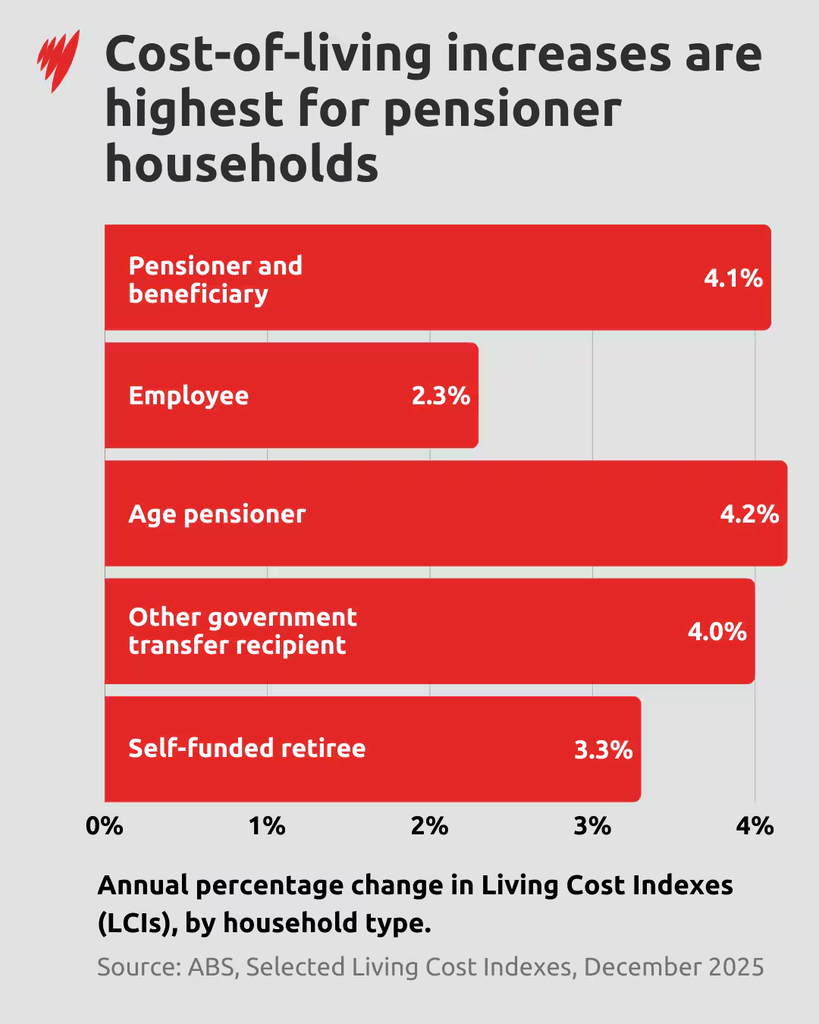
This is where the linguistics becomes particularly interesting. “Inflation” is causal and faintly clinical. By contrast, “Cost of living” is metonymic. It substitutes the real consequence for the abstract cause, and consequences persuade where mechanisms merely inform. After all, nobody experiences 4% inflation directly, but everyone registers a steeper total at the till. American cognitive linguist George Lakoff’s observation that political argument is won or lost on the frames available to describe it, rather than on the underlying facts, thus applies with unusual precision here.
Its second, subtler virtue is agnosticism about cause. “Cost of living crisis” names an effect while remaining silent on etiology, closer to what theorists of political rhetoric call an empty signifier. This vacancy is the phrase’s chief asset, since it invites every faction to supply its own villain without having to argue for one.
A vessel built for opposing cargos
Observe how differently the identical three words are deployed. On the left, “cost of living” typically becomes shorthand for corporate profiteering or landlord extraction, casting the crisis as one of distribution, remediable through price caps or larger transfers. On the right, the same phrase more often indicts the state itself, through profligate spending, restrictive planning law or an underbuilt energy grid, with remedy framed on the supply side. Both camps deploy the same signifier to narrate opposite causal stories, and that interchangeability is precisely the source of its political utility. It permits a politician to sound responsive to hardship while remaining almost entirely uncommitted on what produces it.
This should trouble anyone invested in serious economic argument. “Cost of living relief” has become a reflexive a line in both conservative and progressive press releases, perhaps a fuel-excise cut here or a one-off rebate there. These measures are dispensed even when the underlying diagnosis, that such policies are themselves mildly inflationary palliatives rather than structural correctives (housing supply, energy investment, productivity growth), would counsel otherwise. A phrase that permits the appearance of responsiveness without the discipline of specificity is dangerous in direct proportion to how easily it is reached for.
Signs of semantic wear
Political phrases rarely retain their force indefinitely, and this one already shows evidence of fatigue. American discourse has substantially migrated to “affordability,” a term that is less concerned with the trajectory of prices than with the widening gap between prices and incomes, which reopens questions of wages and housing stock that “cost of living” tends to foreclose. Australian vernacular, meanwhile, has generated the ironic diminutive “cozzie livs”, the kind of self-mocking coinage that typically surfaces once a phrase has been repeated past the point of sincerity into the territory of cliche.
The real finding is that the vocabulary chosen to describe that strain quietly predetermines which remedies sound plausible. “Cost of living” flatters every party’s prior convictions while obliging none of them to state a cause. The next useful shift in this debate may not be a policy at all, but a phrase precise enough to finally name one.
Read more: The Insight Corner