
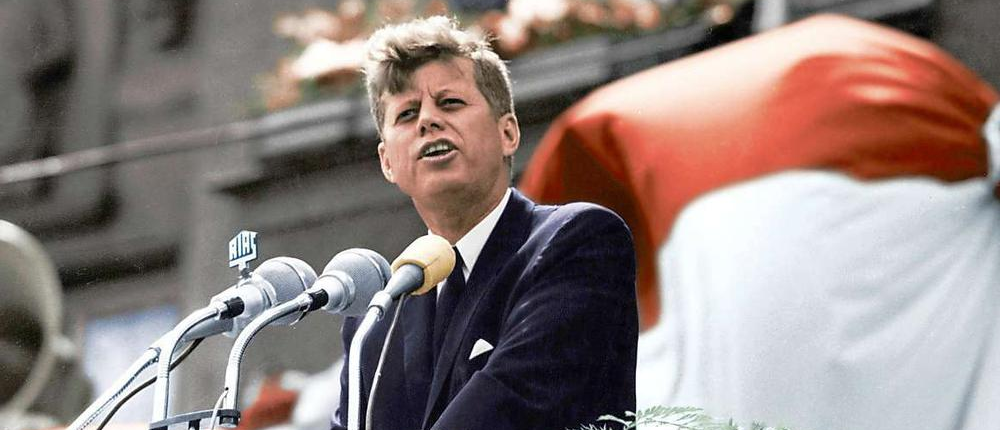
The Cold War is full of stories about words that nearly started a war. They are irresistible because they present catastrophe as a clerical error, something an alert interpreter might have prevented. Most of them do not survive inspection. The famous cases often turn out to be failures of context, myths about errors that never happened or embarrassments with no strategic consequence at all. The following four cases demonstrate this range – a threat that may have been a funeral, a blunder that never occurred, a failure that was real but small and an error that survived because everyone liked it. Together, they reveal less about translation and more about what an expectant audience wanted to hear.
The threat that was a funeral
At a farewell reception for Polish leader Władysław Gomułka in Moscow on 18 November 1956, Nikita Khrushchev was reported to have told Western ambassadors the line the world still remembers today, “We will bury you.” Headlines treated it as a threat. The standard correction, repeated in a New York Times essay, is that he actually meant “We will outlast you” and that the mistranslation was merely an error on the part of his interpreter. Some linguists are less sure. A Language Log discussion argues that the interpreter’s literal rendering was correct and that the real issue is what English speakers infer from the words – ‘bury’ conveys a sense of outliving someone, as in a woman who buried four husbands. Khrushchev himself later assured a Yugoslav audience in 1963 that of course he would not ‘bury’ anyone with a shovel.
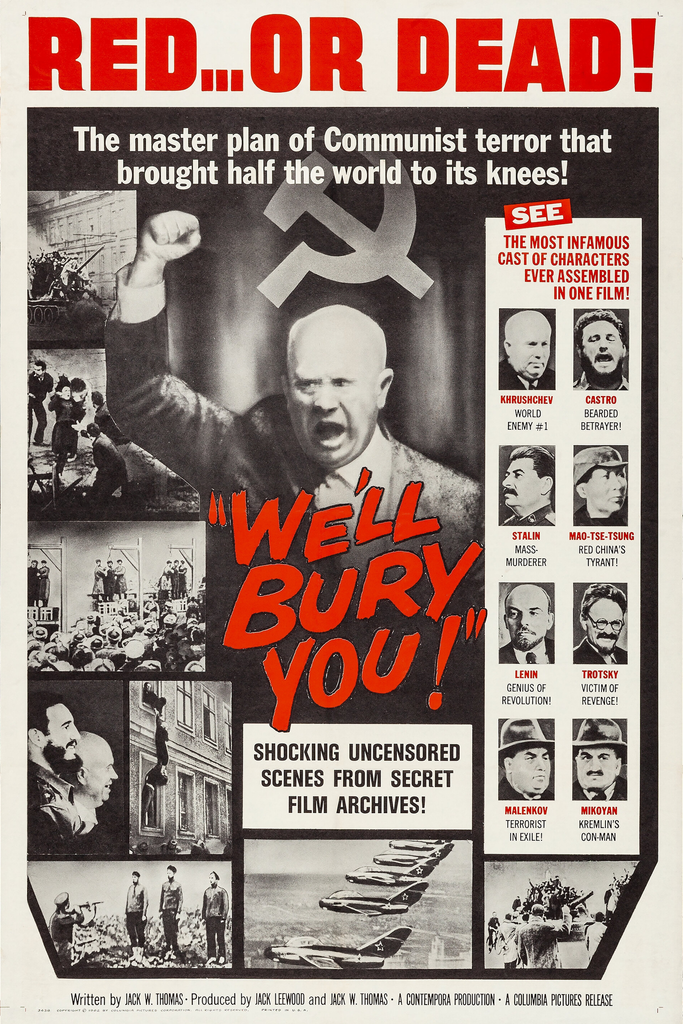
Here, the realist footnote also matters. The Soviet invasion of Hungary had already begun on 4 November, two weeks earlier. An accurate translation can repair the grammar of a threat without altering the situation in which it was made. ‘Outlasting’ you, said by a government crushing a neighbour, is not much of a comfort.
The error that never happened
When John F. Kennedy told a crowd in West Berlin on 26 June 1963 that he was a “Berliner”, the legend runs, he announced that he was a jelly doughnut. This story does not hold up under scrutiny. Linguist Jürgen Eichhoff showed in 1993 that the word “ein” was needed to make the claim figurative, since without it Kennedy would have been saying he was literally from Berlin. The pastry, moreover, was not called a ‘Berliner’ in Berlin, where locals said ‘Pfannkuchen’ instead. The phrase came from Kennedy’s translator, Robert Lochner, who was raised in Berlin, and native speakers cheered wildly when they heard it. The myth thrives because it makes a powerful man a fool in a language he does not command, and because it casts translation as a trapdoor rather than a craft.
The failure that was real
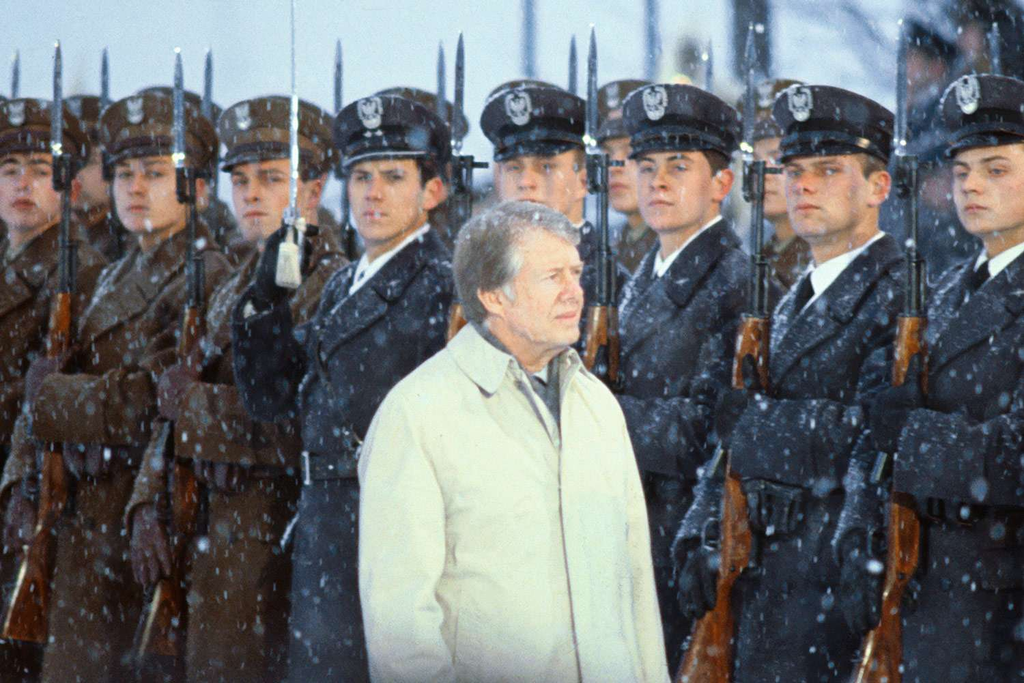
Real failures do occur, but they are much smaller than the legends. In December 1977, Jimmy Carter’s interpreter in Warsaw was Steven Seymour, a freelance linguist hired by the Department of State for only $150 a day, skilled at written Polish but weaker in the spoken word. Carter’s remark that he had left the United States that morning reportedly came out as abandoning it, and his wish to learn the Poles’ desires for the future acquired carnal overtones. Details vary between retellings and have clearly been embroidered, but the core is instructive – translating a page and interpreting a speech are different crafts, and a government that confuses them pays in public embarrassment. The cost was bafflement in Warsaw, but not war.
The misunderstanding too delightful to correct
When Chinese Premier Zhou Enlai told Nixon in 1972 that it was too early to say what the French Revolution had achieved, the remark became shorthand for Chinese patience, a civilisation that measures time in centuries. In 2011, Chas Freeman, Nixon’s interpreter on the trip, said that Zhou was talking about the turmoil in Paris in 1968, not 1789. Freeman admitted the confusion had been too pleasing to bother correcting at the time. That is the especially revealing detail. The error survived because it flattered a stereotype, and because the people best placed to fix it enjoyed it. The error needed no mistranslation, only a ready audience.
What the stories teach
The pattern across all four is that meaning survives only in context, and the version that spreads is the one that suits what listeners already believe. Hawks and doves each keep a favourite reading of Khrushchev – ‘bury’ as proof of intent, or ‘bury’ as proof of a clerical slip. For anyone communicating across a language barrier in a crisis, the practical lessons are plain, that one should avoid idiom, use trained interpreters rather than convenient ones and confirm what was understood rather than what was said. For the rest of us, the lesson is to distrust any story in which history turned on a single word. A correct translation tells you what was said, but it does not tell you what was meant nor what was done. The Cold War turned on missiles, tanks and choices, not on a clerical error.
Read more: The Insight Corner



I’d always heard the Kennedy doughnut story. Had no idea it wasn’t actually true.
Sounds like Khrushchev knew exactly what he was saying to me
Yeah, not sure “we will outlast you” is much more reassuring either…
Poor Carter 😂 Imagine flying halfway around the world and having your interpreter say that.
I’m not entirely convinced by the Zhou Enlai explanation, is there an actual transcript showing he meant 1968? Seems like we’re just taking the interpreter’s word for it decades later.
Fair question. Memories from 40 years later aren’t always reliable.
My German teacher told us the Berliner story in high school (apparently even the teachers fell for it).
$150 a day for the president’s interpreter. What could go wrong.
Interesting how these stories get repeated for decades without anyone bothering to check them, makes you wonder how many other bits of history we just accept
Probably quite a few. A good story usually beats a boring explanation.
Worth remembering the Soviets really did invade Hungary. The wording wasn’t exactly the main issue.