In an extraordinary and historic development, Venezuelan President Nicolás Maduro, a dictator accused of rampant corruption, authoritarian rule and masterminding an international drug trafficking network, has been captured by the United States and transported to New York. The events of January 3 have rocked the geopolitical landscape of Latin America, striking at the heart of one of the region’s most entrenched and destructive regimes.
For over a decade, Venezuelans suffered under a regime that weaponised the country’s oil wealth and facilitated criminal networks that have inundated the United States with illicit narcotics. Unsurprisingly, news of Maduro’s capture has set off heated debate worldwide, but for ideologically consistent proponents of democratic values and the rule of law, it represents well-deserved justice for a leader whose decade-long tenure has brought misery to millions.
Operation Absolute Resolve
Codenamed Operation Absolute Resolve, the procedure took place in the early hours of January 3 as American forces orchestrated a series of targeted attacks in northern Venezuela. Within hours, the mission succeeded in its main objective: the arrest of Maduro and his wife, Cilia Flores, who are currently in American custody. According to officials, American intelligence networks were tracking the movements of Maduro for several months prior to his capture, despite his efforts to move between safe houses.
Upon capturing Maduro, the United States transported him to the Southern District of New York to face federal charges, the most prominent of which include offences relating to narco-terrorism and drug trafficking. For a regime so deeply entangled within criminal networks exporting vast quantities of narcotics to American communities, this represents a satisfying end. The evidence supporting Maduro’s indictment is damning, built upon over 20 years of investigation into his use of government infrastructure to empower international criminal gangs. From Manhattan district courts, he has pleaded guilty to non-culpable pleas and alleged that the United States “kidnapped” him as the legal president of Venezuela, a desperate effort to avoid prosecution.
A Lifeline for Venezuelans
The implications of Maduro’s arrest extend far beyond the legal indictment against him. For the Venezuelan people who have suffered under hyperinflation of almost 2,000,000%, a severe lack of access to basic necessities and the brutal suppression of dissent, the capture of Maduro marks a monumental transition from a decade of destructive governance.
Donald Trump has indicated that he intends to bring stability to the Venezuelan economy, reintroduce a democratic form of government and utilise Venezuela’s vast oil reserves responsibly. He declared that the United States would guide a transitional Venezuela to reestablish political legitimacy and economic productivity, a testament to the transformational potential of American interventionism. The region has enthusiastically welcomed this approach, with Argentine President Mauricio Macri celebrating the capture of Maduro as a triumph of freedom and the beginning of Venezuela’s economic rebirth.
Reassertion of Security in the Western Hemisphere
The capture of Maduro sends a strong message about American resolve in combatting the destructive influence of foreign powers that have sustained repressive regimes. Over the past decade, Maduro’s Venezuela became a haven for anti-American proxies and partnerships with hostile actors. Removing that influence provides the opportunity for the reorientation of Venezuelan foreign policy toward democratic values and economic cooperation with the West.
By acting decisively, Trump allowed the United States to signal that it will not abide by a government that imperils regional stability through corruption and irresponsible alliances. His stance has established much-needed deterrence against both criminal cartels and rogue organisations that have historically taken advantage of vulnerable governments in the region.
Celebration on the Streets
Perhaps the most revealing aspect of the capture of Maduro has been the stark divide between those who suffered under his rule and his self-declared defenders abroad. Across Venezuela and throughout the international diaspora, images and firsthand accounts show ordinary citizens flooding the streets with celebration and cries of hope for a better future. For Venezuelans who endured over a decade of food shortages, political repression and the worst inflation crisis in the world, the removal of the man who embodied their plight was deeply personal.
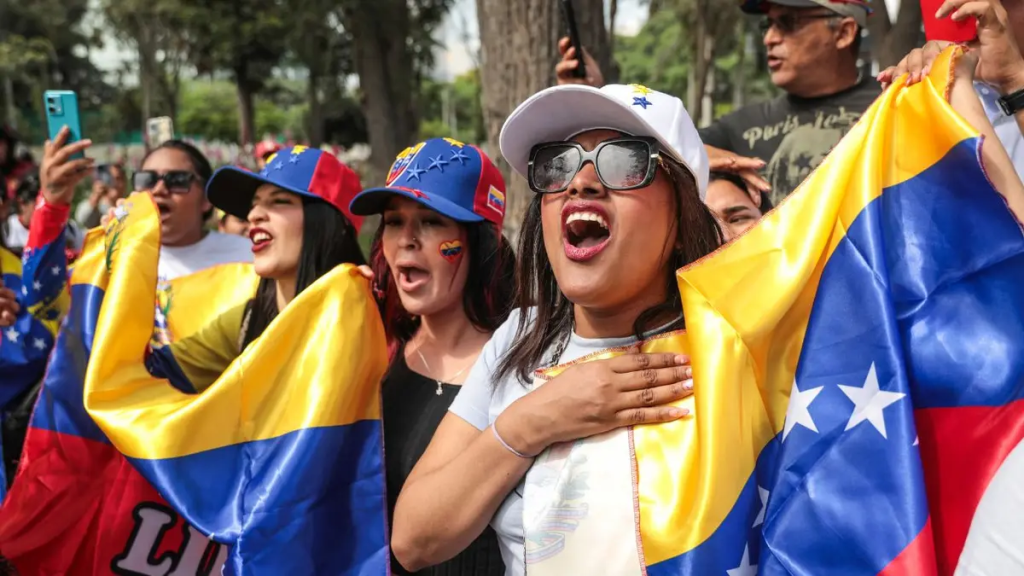
Yet unsurprisingly, the bulk of the criticism has emerged not from those directly affected by the regime, but from left-wing activists and politicians. Their objections centre on trivial procedural concerns, on buzzwords such as imperialism, with a blatant disregard for the lived reality of Venezuelans themselves. For the left, Maduro is discussed less as a ruler responsible for the collapse of his country and more as a symbol in a broader ideological argument against Trump.
A Defining Moment for Democracy
Venezuelans across the world will remember January 3 not only for the capture of Maduro, but as a monumental stride in their relentless struggle with tyranny, corruption and crime. The first, and perhaps most significant, step toward a freer and more prosperous Venezuela has been taken.
Read more: The Insight Corner