

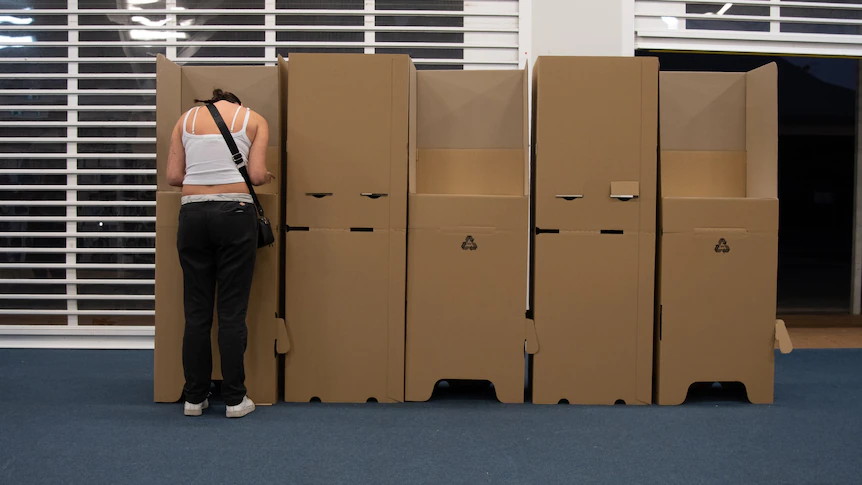
Every few years, Australians perform a ritual that much of the democratic world finds rather peculiar. On a Saturday morning, millions make their way to school halls and community centres, queue beneath election posters and emerge from cardboard voting booths with their democratic obligations fulfilled. Some follow politics obsessively, while others could barely name their local member. Yet all are expected to participate. For a country so attached to the language of individual freedom, compulsory voting might seem an odd tradition. Its longevity, however, speaks to something important about the Australian understanding of democracy, that political participation is regarded as a responsibility of citizenship, rather than an enthusiasm reserved for the politically engaged.
The Making of a Democratic Habit
Compulsory voting was introduced federally in 1924, following an election in which barely 59% of enrolled Australians cast a ballot. Nationalist Senator Herbert Payne proposed the reform, concerned that declining participation threatened the legitimacy of representative government. At the subsequent election in 1925, turnout rose to more than 91%. What began as a practical response to electoral apathy gradually became an unquestioned part of Australian political culture.
The significance of Payne’s reform extends far beyond the numbers. By making electoral participation an ordinary civic obligation, Australia established a democratic habit that has endured through economic crises, wars and profound social transformation. Voting became something citizens were simply expected to do, much as they were expected to serve on juries when called upon. Its very ordinariness helped preserve its importance. Australians need not approach every election with ideological fervour to recognise that the composition of Parliament is, in some small measure, their responsibility.
Consider the contrast with the United Kingdom, where turnout at the 2024 general election was just 59.7% of registered voters. Australia’s 2025 federal election attracted 90.7% of enrolled voters. The figures reflect different electoral systems and political circumstances, but they illustrate the extraordinary breadth of Australian participation. Here, political representation is determined by an electorate that comes remarkably close to encompassing everyone entitled to vote.
Whose Voices Count?
The greatest virtue of compulsory voting lies in whom it brings into the political process. In voluntary systems, participation is rarely distributed evenly across society. Those with stable incomes, established homes and a strong interest in politics often find voting easier than citizens preoccupied with work or financial insecurity. Research by political scientist Anthony Fowler into Australia’s adoption of compulsory voting found that wealthier Australians had previously participated at substantially higher rates than working-class voters.
This is particularly significant because politicians naturally respond to the people who elect them. When electoral participation depends heavily on enthusiasm and mobilisation, parties have an incentive to concentrate on groups most likely to turn out. Citizens who seldom vote can become politically invisible, even when government decisions profoundly affect their lives, a predicament that is upended by compulsory voting. The young renter in Melbourne, the shift worker in western Sydney and the retiree in regional Queensland all count on election day, regardless of their interest in political affairs. Parties must compete for citizens who might otherwise remain disengaged, encouraging campaigns to address concerns beyond those of the most committed supporters.
It would admittedly be naive to suggest that compulsory voting eliminates political extremism or guarantees thoughtful campaigning. Australia has experienced its share of populism, polarisation and superficial electoral promises. Nevertheless, the obligation to persuade a broad electorate reduces the value of strategies designed primarily to energise a narrow political base. Candidates cannot rely solely on the anger of their supporters when millions of less enthusiastic Australians will also be casting ballots.
The Question of Freedom
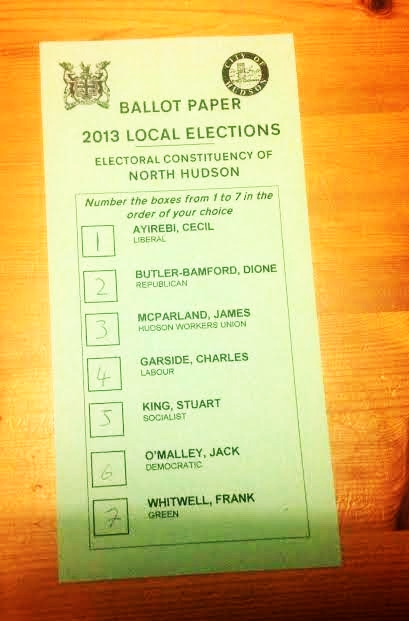
The most compelling objection remains principled. If voting is a democratic right, surely citizens should also possess the right to abstain. An individual who finds every candidate objectionable might reasonably resent being compelled to participate in an election that offers no satisfactory choice. Australian law accommodates some of this objection through the secrecy of the ballot. Citizens are required to attend and participate in the voting process, while their actual political choices remain beyond government scrutiny. A voter may leave a ballot informal, decline to endorse any candidate or express dissatisfaction without revealing that decision to the state. The distinction between requiring electoral participation and compelling political allegiance is an important one.
There is nevertheless a genuine restriction on personal liberty, and pretending otherwise would weaken the argument for compulsory voting. The question is whether the burden is proportionate to the public benefit. Democracies already impose certain obligations because collective institutions depend upon individual participation. Jury service provides an obvious parallel, as citizens may be called upon to contribute to the administration of justice regardless of their personal enthusiasm. Electoral participation rests on a comparable principle of shared responsibility.
Compulsion also has its limitations. At the 2025 federal election, approximately 5.5% of votes were informal. Attendance at a polling booth cannot guarantee political knowledge or considered judgement. Civic education, accessible electoral information and public confidence in institutions remain essential, and a compulsory ballot is valuable only insofar as citizens can exercise it meaningfully.
Still, the alternative carries its own democratic costs. A system in which millions routinely abstain risks allowing political disengagement to become a permanent feature of representation. Eventually, governments may find themselves elected by increasingly unrepresentative sections of the population, while the voices of those who feel least connected to politics grow fainter still. Australia’s electoral system makes a modest demand of its citizens. Once every few years, they must devote a small part of their Saturday to deciding who will govern them. They are free to distrust the parties, reject the candidates or spoil their ballot. What they are asked to acknowledge is that democracy remains, however imperfectly, a shared undertaking.
That expectation has served Australia for more than a century. In an age when democratic participation is declining across much of the developed world, it is an inheritance worth preserving.
Read more: The Insight Corner


One of the few things Australia actually gets right. Can’t imagine having elections where half the country doesn’t bother turning up.
Been voting for 35 years and still look forward to the democracy sausage
Sorry but forcing people to vote seems pretty undemocratic to me, if I don’t like any of the candidates why should I have to turn up?
You don’t have to vote for anyone. Just turn up and leave the ballot blank.
Didn’t realise turnout was as low as 59% before they introduced it – makes you wonder why other countries haven’t followed…
If voting becomes optional we’ll just end up with the most fanatical people deciding everything.
Isn’t that basically what happens in America?
My only issue is that so many people seem to have no idea how preferential voting works. We should probably teach that properly in schools.
The UK comparison is interesting but surely there’s more to turnout than whether voting is compulsory. Americans seem to spend about two years campaigning for every election and still struggle to get people to vote.
And they spend billions doing it, completely mad
I work weekends and usually vote early. Takes about five minutes but never really understood why people make such a fuss about it.