In theory, politics should reward the best argument. Citizens hear evidence, weigh principles, compare policies and decide. In practice, that is rarely how public opinion moves. A joke often lands harder than a briefing paper, not because they are more truthful or arguments do not matter, but because they have the unique capacity to compress a political judgment into a form that is memorable, social and emotionally charged. A good joke compels its audience to laugh, repeat it to others and, without quite noticing, absorb its underlying claim. This is precisely why jokes can be more politically powerful than arguments: they travel faster, face lower resistance and often define the emotional meaning of an issue before a formal debate has even begun.
How Jokes Shape Political Perception
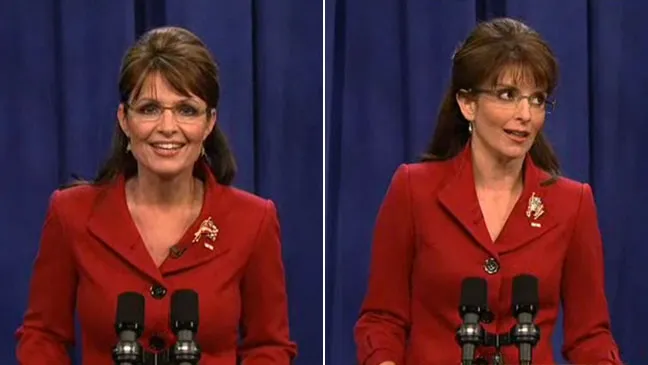
One reason is speed. Arguments are linear, unfolding in a step-by-step sequence. On the other hand, jokes are instantaneous. Humour can transform a politician’s most glaring insecurity into a single image or phrase that persists in the mind long after a carefully reasoned rebuttal is forgotten. Actress Tina Fey’s impersonation of Alaskan governor Sarah Palin serves as a classic modern example of this phenomenon. A 2012 study found that viewership of Fey’s Saturday Night Live parody of Palin’s vice-presidential debate performance was associated with declines in approval rating and even shifts in vote intention among young adults, particularly independents and Republicans. Needless to say, the sketch had a negligible impact on the ultimate result of the election, but it did succeed in crystallising a public impression of Palin so effectively that later arguments about her competence had to fight uphill against a caricature that millions already understood.
Simultaneously, jokes can be powerful by revealing contradiction more effectively than direct advocacy. The Pew Research Centre’s analysis of The Daily Show found that it focused heavily on politics, using archival footage to illustrate contrast and contradiction and often fulfilling a function comparable to journalism by compelling viewers to think critically about the public square. The show is selective and obviously comic, but that is precisely what drives its efficacy: satire can cut through the tedious fog of professional political language and elucidate hypocrisy in a way that a conventional op-ed typically cannot. When an audience claims that a satirist ‘just said what everyone was thinking,’ they are suggesting that a joke exposed an absurdity that formal argument had described but not rendered vivid.
Humour as a Political Weapon
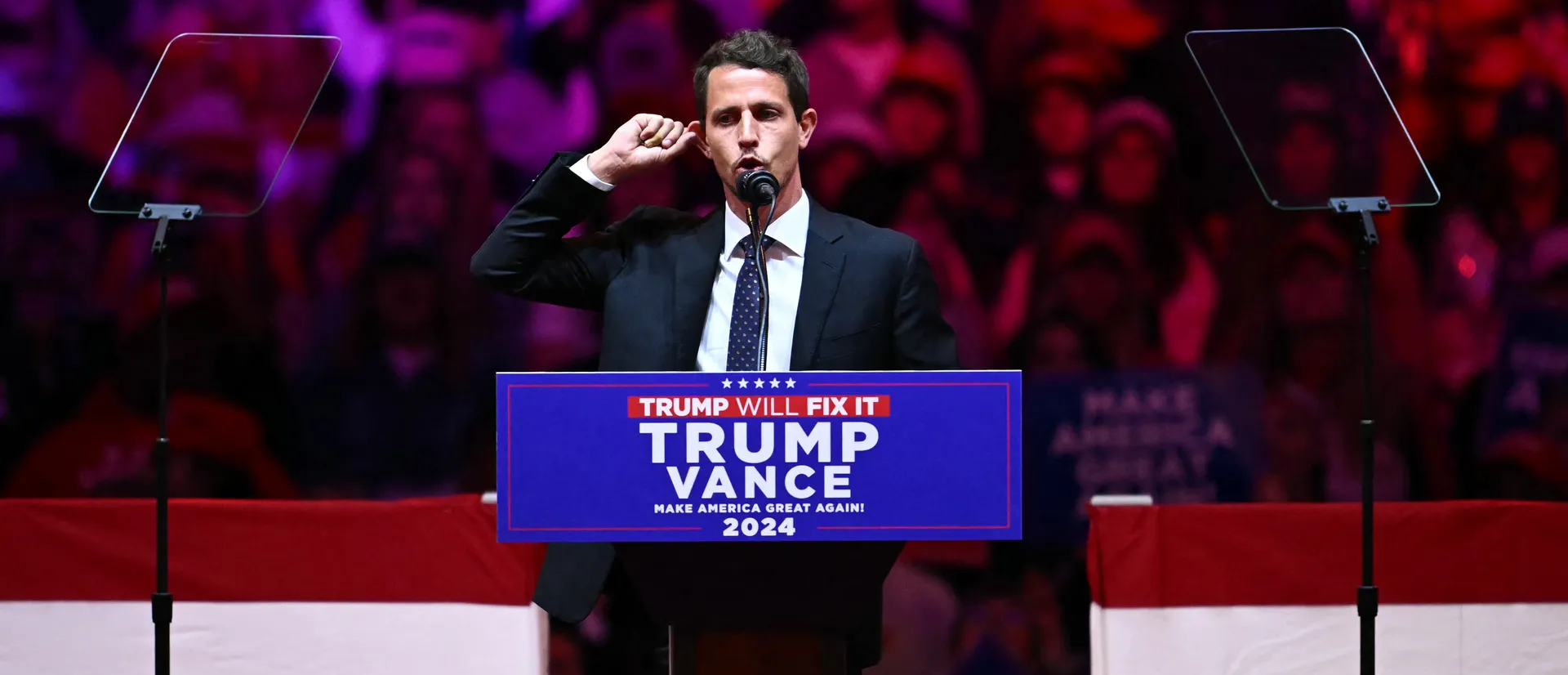
Recent politics offers a sharp example of how quickly a joke can become a campaign event. At Donald Trump’s Madison Square Garden rally in October 2024, comedian Tony Hinchcliffe described Puerto Rico as a “floating island of garbage.” The remark was almost universally condemned among Democrats alongside various Puerto Rican celebrities, while the Trump campaign scrambled to distance itself from it. One Trump supporter interviewed by Reuters declared that he would sit the election out, while the subsequent backlash immediately devolved into a broader struggle to secure Latino and Puerto Rican votes in swing states such as Pennsylvania. No policy white paper could have generated such a visceral and immediate emotional uproar. The joke mattered, because beyond a mere political platform, it seemed to illustrate the cultural atmosphere of the MAGA movement and the instincts of the coalition surrounding it.
The power of jokes becomes even more evident under regimes which do everything in their power to diminish their influence. Authoritarian systems rarely persecute individuals for producing meticulous constitutional arguments on late-night television; they are primarily concerned with avoiding ridicule. Under Egyptian autocrats, humour served as one of the few channels for protest, and was stamped out abruptly by president Abdel Fattah el-Sisi. The regime’s preoccupation with the complete elimination of satire is well illustrated by the cancellation of Bassem Youssef, Egypt’s most famous comedian. More recently, a Russian court sentenced sculptor Jacques Tilly in absentia over a satirical float depicting Vladimir Putin and Patriarch Kirill of Moscow, a seemingly disproportionate reaction which illustrates the capacity of ridicule to puncture authority in ways formal opposition often cannot.

Why Humour Still Matters
Humour can matter not only in undermining power, but by enabling communities to endure conflict. The Reuters Institute argues that humour has played a pivotal role in Ukraine’s response to war and Russian disinformation, converting widely-circulated memes and jokes into a source of morale, national identity and strategic communication. Beyond mere entertainment, jokes in this context provide a way of informing citizens that the enemy is not omnipotent, and that fear is a universal condition which can be shared without becoming paralysing. Thus, jokes have the ability to create solidarity in a way that political arguments simply cannot.
This matters in Australia too. In 2025, the ABC reported that Punter’s Politics had built a significant audience through satirical skits that cited reputable resources and made politics more accessible to “everyday Australians.” That example is revealing. Rather than a substitute for political substance, humour was used as a gateway into it. In an age of increasingly short attention spans and omnipresent social media feeds, satire often acts as the entry point that allows people to become sufficiently interested to care about the underlying issue. Admittedly, informed arguments continue to do the heavy lifting in shaping the eventual opinion, but the joke opens the door.
Ultimately, governments cannot be run on punchlines, and satire has a tendency to mislead, oversimplify or harden cynicism. But politics is not only a contest over facts. It is a contest over the attention, memory, identity and mood of the collective conscience. While arguments tell people what to think, jokes shape what feels ridiculous, intolerable or obvious. Once a politician, policy or regime becomes laughable, it often becomes weaker too. Thus, jokes can become significantly more powerful than arguments in the realm of political persuasion, not because they replace reason, but because they decide which arguments the public is even willing to hear.
Read more: The Insight Corner